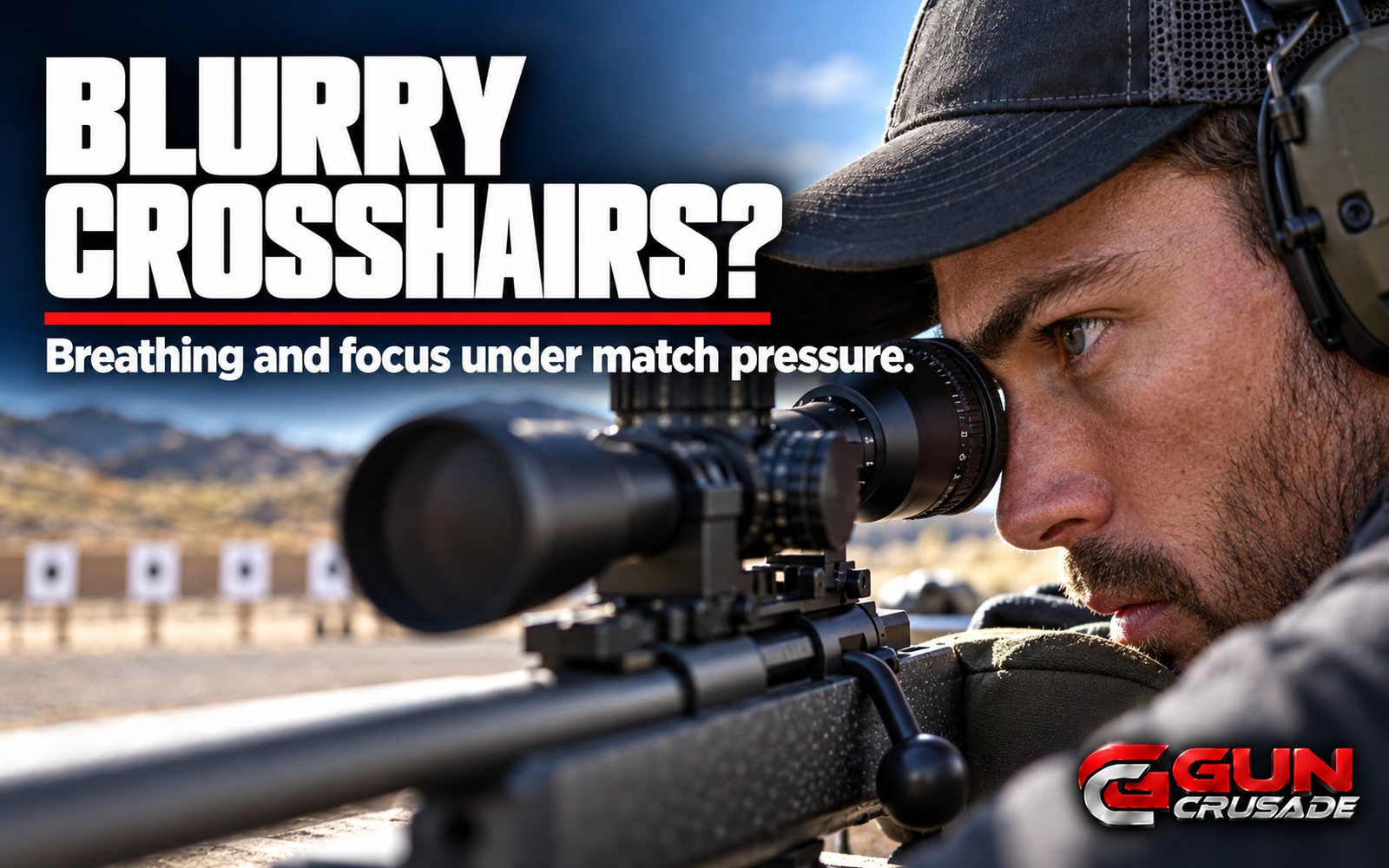
Every shooter has been there. You settle in behind the rifle, the reticle is crisp, and then, the longer you hold, the crosshairs start to blur and the image seems to dim. A recent tech tip from AccurateShooter.com, drawn from experienced competitors on its forum, points to a simple culprit: oxygen, or the lack of it.
What Is Happening to Your Eyes
As AccurateShooter reported on October 15, a forum member described exactly this problem: lingering on target made his crosshairs go fuzzy and the sight picture darken. He initially suspected his contact lenses. Other competitors recognized the symptoms right away as those of a shooter holding his breath too long while staring hard at the target.
One forum member, Phil H., put it bluntly: “Our eyes are tremendous oxygen hogs.” When you hold your breath and lock your focus on a single point, your vision is one of the first things to suffer. The problem is not limited to scopes; it shows up over iron sights too, and it tends to get worse with age.
Practical Fixes You Can Use This Weekend
The good news is that the remedies are free. Drawing on the advice AccurateShooter collected, here is a simple routine to practice:
- Breathe deeper between shots. Take a few full breaths to restore oxygen before you settle in again.
- Use a breath-then-break rhythm. One competitor suggested taking a slow, deep breath, exhaling, then breaking the shot during that natural pause rather than holding indefinitely.
- Do not overstay the hold. If the shot is not there within a few seconds, come off the trigger, breathe and reset. Another experienced Arizona shooter advised getting the shot off promptly or briefly closing your eyes to refresh them.
- Rest your eyes. Between shots, look away from the optic. Glancing at green grass or the far horizon without magnification gives your eyes a break.
- Protect your eyes from wind. Wrap-around shooting glasses help, and keeping your eyes moisturized cuts down on strain during a long relay.
The original poster reported that these changes tightened his groups a bit. As he put it on the forum, every little bit helps.
Why It Matters Beyond the Bench
This is not just a benchrest or long-range concern. Smallbore and air rifle shooters, bullseye pistol competitors and hunters waiting on a deer to step clear all deal with long holds. One forum member also pointed to cardiovascular fitness as part of the answer, since better conditioning helps your body deliver oxygen where it is needed.
GUN Crusade’s take: Breathing is one of those fundamentals most of us learned once and then forgot about. It is worth building into dry-fire sessions at home, where you can practice a consistent breath cycle without spending a single round. A steady routine on the practice range carries over to match day and to the deer stand.
If blurry vision persists even with good breathing habits, or if it comes with headaches or other symptoms, it is wise to talk with an eye doctor. Your prescription, or your contacts, may need a check.