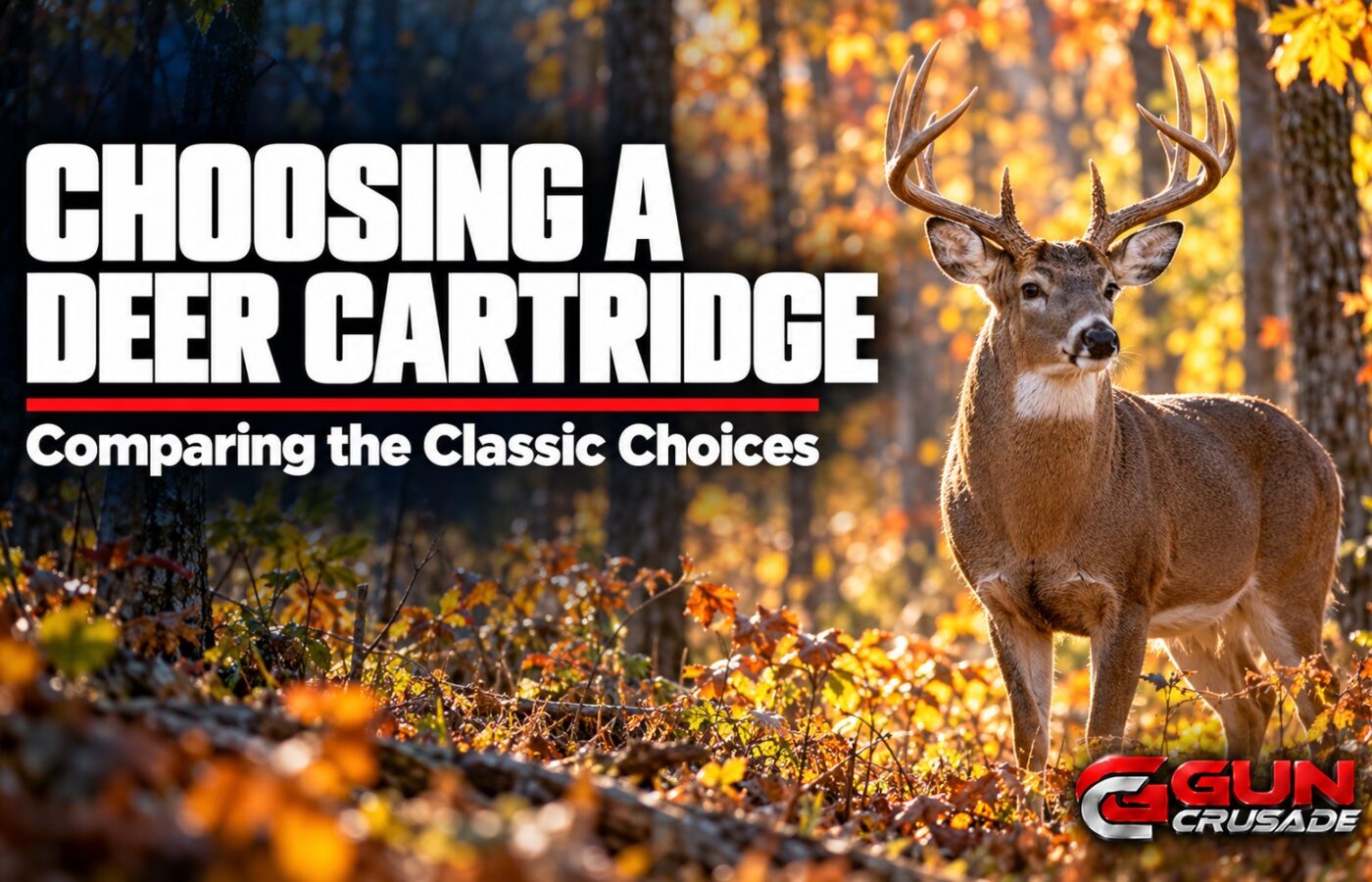
Walk down the ammo aisle and you will see dozens of rifle cartridges, with a new one introduced almost every year. For whitetail deer, the honest truth is that a handful of proven cartridges cover nearly every situation. What matters most is a well-built bullet put in the right place.
The classics
.243 Winchester. Light recoil and flat shooting make it a favorite for youth and smaller-framed hunters. With quality bullets and good shot placement, it handles deer well. It is a less ideal choice for elk or very large-bodied deer at long range.
6.5 Creedmoor. Introduced in 2007, it became a modern standard thanks to low recoil, excellent accuracy and long, aerodynamic bullets. It is a great all-around deer cartridge and widely available.
.270 Winchester. A long-time favorite of deer hunters. It shoots flat with moderate recoil and handles everything from whitetails to mule deer.
.308 Winchester. Accurate, efficient and available almost everywhere. It works in short-action rifles and has an enormous selection of loads.
.30-06 Springfield. More than a century old and still capable of handling just about any North American game with the right bullet. Recoil is a bit stiffer.
The newer options
Manufacturers keep adding cartridges such as 22 Creedmoor, 7mm PRC, 7mm Backcountry and 6.8 Western, which appear across many 2026 rifles in American Hunter’s roundup. They have real advantages for long-range hunting in open country. For most Eastern deer hunting, where shots are usually under 200 yards, they offer little practical advantage and their ammunition can be harder to find and more expensive.
Straight-wall cartridges
Some states restrict deer hunting in certain areas to straight-wall cartridges such as .350 Legend, .360 Buckhammer, .450 Bushmaster and .45-70. If you hunt in those states, those rules decide the question for you. Always check current regulations.
How to choose
- Where will you hunt? Thick woods and fields under 200 yards: any of the classics work. Open country with long shots: consider the flatter-shooting options.
- How much recoil can you handle well? A hunter who flinches will miss. Lighter recoil leads to better practice and better shots.
- Can you find ammo? Choose a cartridge your local stores stock, especially during the season.
- What bullet? A controlled-expansion hunting bullet from a reputable maker matters more than the cartridge name.
Whatever you pick, practice with it. A hunter who knows exactly where their rifle hits, and can shoot it well from field positions, is far more effective than one with the “perfect” cartridge.