
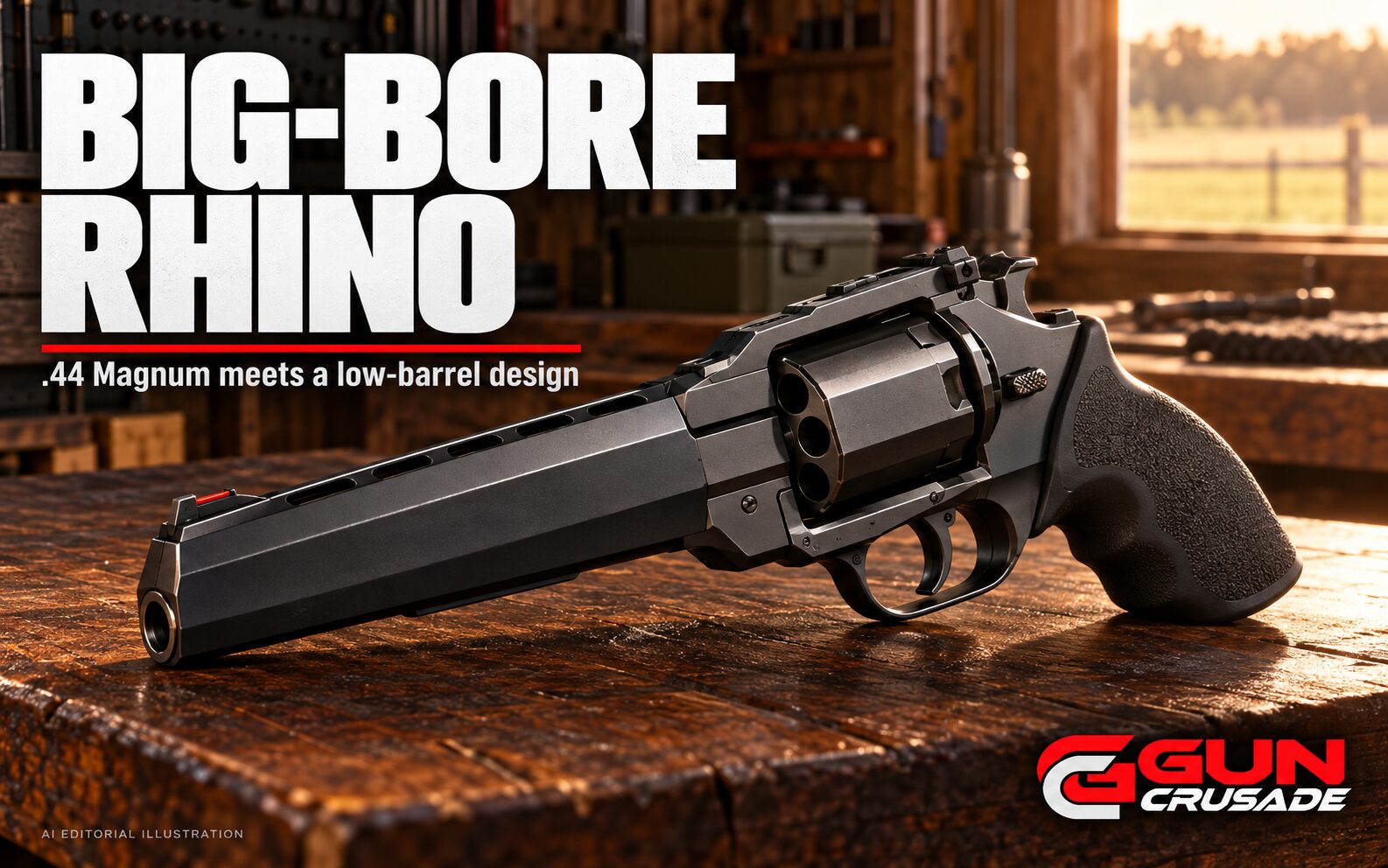
Chiappa’s Rhino 60 DS in .44 Magnum puts a larger cartridge into one of the revolver market’s most recognizable layouts. First covered by Shooting Illustrated in January, the large-frame model remains an interesting 2026 product for readers who want to understand the design before judging the styling.
This is a closer look at an existing introduction, not an announcement that the revolver launched this week. The published specifications explain its place in the Rhino family; they do not substitute for an independent range evaluation.
The Published Configuration
Shooting Illustrated describes a six-shot, double-action/single-action .44 Magnum with a 6-inch barrel. Its listed overall length is 11 inches and its weight is 46.7 ounces. The frame uses 7075-T6 aluminum, with a steel barrel and breech shield.
The report lists a Hogue rubber grip, fiber-optic front sight and adjustable rear sight, along with black, white-nickel and gold-PVD finish choices. Those are configuration details from the publication’s first look, not measurements taken by GUN Crusade.
The Barrel Position Is the Point
The Rhino fires from the cylinder’s bottom chamber. That places the barrel lower relative to the hand than a conventional top-chamber revolver layout. The design is intended to reduce muzzle rise.
That intention should be described carefully. A lower barrel does not make recoil disappear. How a particular revolver feels also depends on its weight, ammunition and the individual handling it. We have not conducted a side-by-side .44 Magnum comparison and cannot assign a measured improvement.
What the Numbers Mean for a Buyer
Our assessment starts with size. This is a substantial handgun on the published dimensions. A reader interested in a distinctive range revolver may welcome that presence; someone shopping primarily for easy everyday carry has a different set of priorities.
The visual design can make that distinction easy to miss. An unusual profile attracts attention, but the owner still lives with the gun’s bulk, grip shape and cost. A finish choice is a matter of taste. Comfortable fit and manageable ownership costs deserve more weight in the decision.
The same applies to the cartridge marking. A larger chambering can be the reason a product interests a reader without automatically being the right choice for that reader. There is no need to treat the most powerful-sounding option as the default.
The Questions a Range Test Should Answer
A useful future evaluation would compare the manufacturer’s design goal with documented results. It would identify the ammunition, describe the test conditions and report both the positive observations and any limitations. A specification list alone cannot answer questions about long-term durability or one owner’s comfort.
Price comparisons also need an exact model and finish. We are not presenting one figure as a guaranteed price for the entire family, and we have not verified local inventory.
The .44 Magnum Rhino is worth understanding because it approaches a familiar revolver problem with a different layout. Whether that approach is worth its size and expense is a personal decision that deserves more than an attractive photograph or a headline about recoil.
Reporting checked October 27, 2026. GUN Crusade has not independently tested this product. Cover image: AI-generated editorial illustration, not manufacturer product photography.