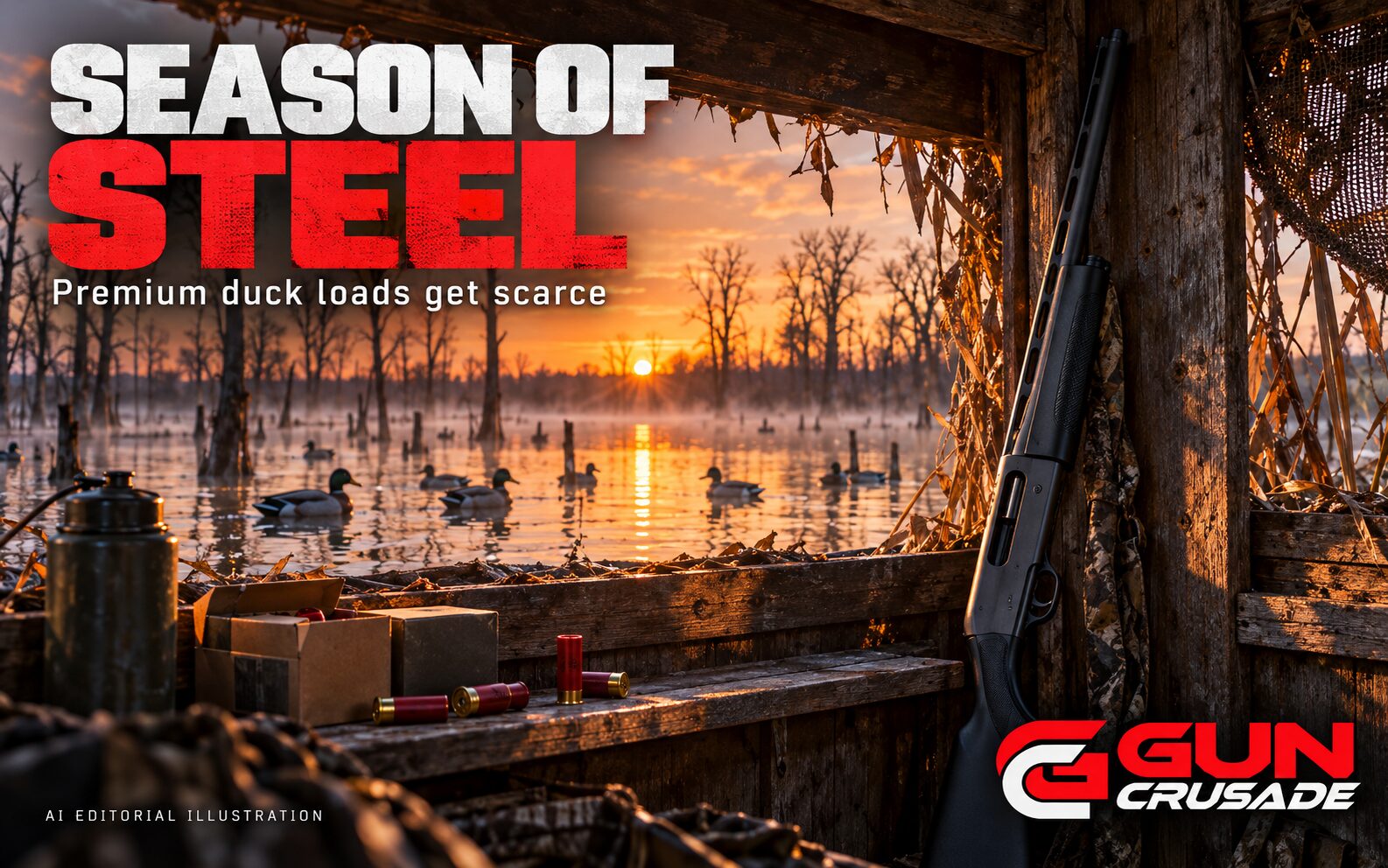
Duck and goose hunters walking into the sporting goods store this fall are finding thinner shelves and higher price tags on the premium nontoxic loads many have come to rely on. In an October 22, 2026 market report, Outdoor Life executive editor Natalie Krebs reported that most major ammunition makers have cut back or dropped many of their high-end waterfowl loads for 2026, leaving steel as the default choice again for a lot of blinds.
For everyday waterfowlers, the takeaway is simple: premium shells haven’t vanished, but they are harder to find and cost noticeably more. Planning ahead, and patterning whatever you can buy, matters more this season than usual.
Price and availability snapshot: The figures and stock descriptions below are from Outdoor Life’s October 22 report, not a live inventory check. Retail prices and availability may have changed.
Why the Shelves Look Different
The squeeze comes down to raw materials. According to Outdoor Life, tungsten prices spiked in 2026, and the raw ingredient used to make tungsten super shot (TSS) is still roughly six times its June 2025 price, depending on the market. China dominates tungsten production, tariffs add to import costs, U.S. domestic production is not yet back online, and the metal is also in demand for defense uses.
Bismuth is scarce and expensive too, and manufacturers have scaled back. Even the cheaper materials are up: Winchester’s Jimmy Wilson told the magazine copper is over $6.50 a pound, about 50 percent higher than two years ago, while the report separately puts low-carbon steel’s increase at roughly 68 percent over the prior year. Steel is still the most affordable option by a wide margin.
Winchester told Outdoor Life that full TSS is “probably dead” for this season because of cost and tariffs, though the company may offer a small run of tungsten blends. That comment concerns Winchester, not every manufacturer.
What’s Still Out There, and What It Costs
Outdoor Life’s survey of the market found a mixed picture by material:
- Bismuth: Remington and Hevi have discontinued many pure bismuth loads. Federal Premium Hevi-Bismuth is still being made, at about $60 for a 25-round box of 2¾-inch 12-gauge No. 4s at big-box stores, or roughly $2.40 a shell. Browning Wicked Blend, about 30 percent bismuth, runs around $40 a box, and Hevi Hammer, about 15 percent bismuth and mostly steel, is widely available and relatively affordable.
- Copper: The U.S. Fish and Wildlife Service approved Boss’s copper shot for waterfowl this summer. Boss CuProX 3-inch 12-gauge loads run about $40 for 20 shells. In Outdoor Life’s testing, copper slightly outperformed bismuth in patterning and penetration despite being a bit less dense.
- Tungsten: Many tungsten loads have been discontinued, including Federal’s 20-gauge Black Cloud TSS, and Hevi XII is currently unavailable. Hevi Hitter, an 80/20 steel-tungsten blend, is still sold by some retailers.
- Apex: The tungsten-focused company is still offering full TSS, but its waterfowl prices are 15 to 27 percent higher than in 2025, and pure TSS and blends were listed as sold out on its website when Outdoor Life checked.
- Steel: Stacked steel loads that mix two shot sizes are the most popular choice this year, offered by Apex, Winchester, Federal and Migra. Outdoor Life notes stacked loads don’t offer a real lethality edge at longer ranges.
Prices vary by retailer and region, and availability can change week to week, so treat these figures as a snapshot rather than a price list.
What It Means for Southeastern Waterfowlers
For hunters working decoys in timber, flooded fields or small marshes, close opportunities can reduce reliance on costly premium shells. Outdoor Life recommends staying inside 40 yards with steel, but that is not a guaranteed effective range for every load, bird or hunter. Use only loads compatible with the shotgun and choke, follow their manufacturers’ instructions, and establish a personal limit through practice and pattern testing.
If you hunt with a 20-gauge or a youth hunter’s gun, the loss of some small-gauge tungsten loads may sting the most. Copper and steel-tungsten or steel-bismuth blends are worth a look as a middle ground between plain steel and the high-dollar options.
What You Can Do Now
- Buy early for the second split. If you have a load you trust, don’t wait until the week before late season to restock.
- Pattern what you actually buy. Outdoor Life recommends patterning your gun with your choke and your load. Different materials pattern differently, so a choke that worked with TSS may not be ideal with steel or copper.
- Keep shots close. Holding shots inside about 40 yards is the single biggest thing you can do to make steel work and cut down on cripples.
- Match shot size to the birds. Teal over a small pond and Canada geese over a cut field call for very different loads.
- Know the law. Only federally approved nontoxic shot types are legal for ducks, geese and coots. Check the approved list and your state’s regulations before trying anything new.
For the differences between shot materials, see our earlier Steel, Bismuth or TSS? Choosing Nontoxic Shot for Waterfowl. This report focuses on the supply-and-price news.
A tough year for the ammunition supply chain doesn’t have to mean a tough year in the blind. With some planning and honest range work, steel can still put plenty of birds on the strap.
Cover image: AI-generated editorial illustration, not manufacturer product photography or a documentary photograph of the reported hunt.