Springfield Armory has started selling the heart of its Echelon pistol by itself. The company’s Echelon Central Operating Group, or COG, is now offered as a standalone part with an MSRP of $295, as first reported by Guns & Ammo, which ran Springfield’s announcement on October 20, 2026. American Rifleman covered the same release the same day.
For shooters who like to tinker, or who want one pistol that can wear several different sizes, this is a meaningful step. Here is what the COG is, what it is not, and how to think about it before you buy.
What the Central Operating Group Is
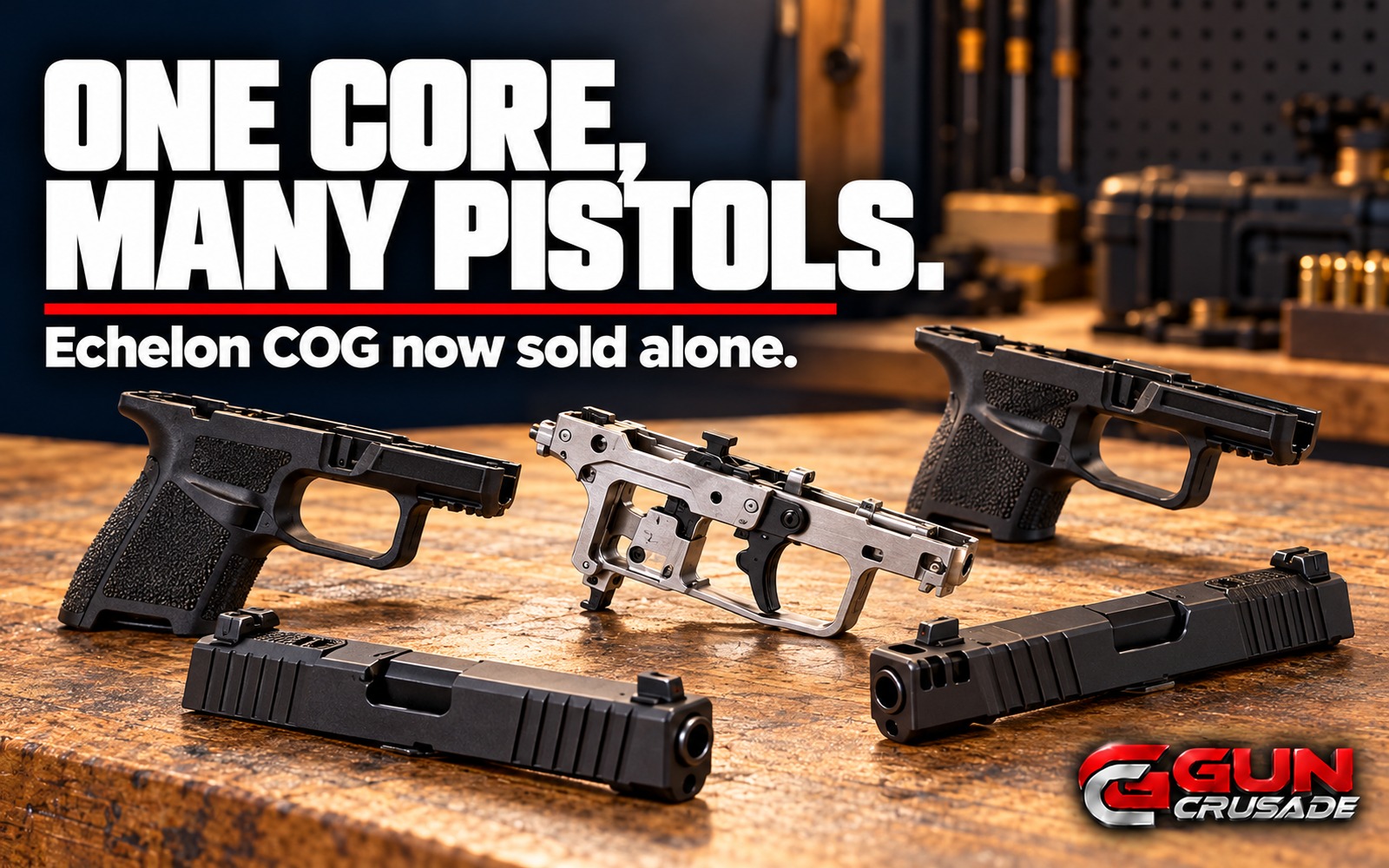
The Echelon is a modular, striker-fired duty pistol. Instead of the frame being the “gun” in the legal sense, the Echelon is built around a removable chassis that carries the trigger and fire-control parts. That chassis is the COG, and it is the part that carries the serial number.
According to the announcement, the COG is made from stainless steel, with critical trigger components machined from tool steel. Springfield says polished and coated surfaces cut down on friction for a smoother trigger pull. The design also includes a second sear intended to help keep the pistol from firing if it is dropped.
Steve Kramer, Springfield’s vice president of marketing, said the serialized COG “established the modular nature” of the Echelon from the start.
What You Can Build Around It
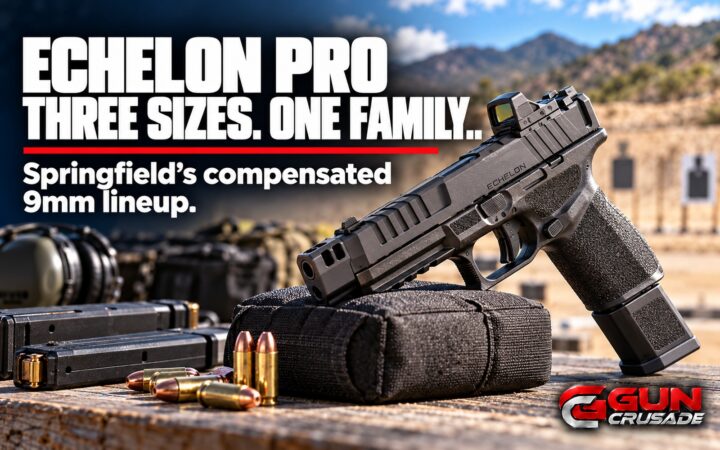
Because the COG is the core, owners pair it with the rest of the pistol separately. Springfield lists three factory grip modules: Compact, Full-Size with a Compact-length dust cover (made for the 4-inch slide), and Full-Size. Factory slide assemblies come in 4-inch and 4.5-inch lengths, each in a standard version or one with an integral compensator.
Barrels, sights, magazines and other accessories round out a build. American Rifleman noted that aftermarket grip modules, such as one from Sharps Bros, already work with the system.
Neither Guns & Ammo nor American Rifleman listed which calibers the standalone COG supports, its weight, or exactly what comes in the box beyond the COG itself. If caliber matters to your plans, confirm it with Springfield or your dealer before ordering.
It’s Still a Firearm: Buy It Through an FFL
This is the most important point for first-time buyers. Because the COG is the serialized part, it is legally treated as the firearm. Both outlets state plainly that it must be transferred through a federally licensed dealer (FFL). That means the same background check and paperwork as buying a complete pistol, and the same age and state rules that apply to handgun purchases where you live.
Grip modules, slides and magazines are generally sold as parts, but laws on magazines and certain accessories vary from state to state. Check your local rules before you assemble a configuration.
What It Means for Everyday Shooters
For a lot of folks, the appeal is simple: one serialized core, several “personalities.” A carrier could run a compact setup for everyday concealment, then move the same COG into a full-size grip and longer slide for a match or for the nightstand. Since only one part is the firearm, you are not buying and registering multiple pistols to get that flexibility.
There are some practical trade-offs to think through, though:
- Total cost adds up. At $295, the COG is only the starting point. Price out the grip module, slide assembly, barrel, sights and magazines before deciding this is cheaper than a complete pistol.
- Train with each configuration. A different grip size or slide length changes how a pistol points, recoils and fits in a holster. Every setup you plan to carry deserves its own range time and its own holster.
- Function-check after every swap. Follow the owner’s manual, and if you are unsure about assembly, let a qualified gunsmith or knowledgeable dealer look it over before you trust it for defense.
- Know your carry rules. Some jurisdictions tie carry permits to specific listed firearms. Swapping configurations could matter there, so check with your issuing agency.
The Bottom Line
Springfield has opened its Echelon platform to people who want to assemble a pistol their own way, and it has done it within the normal, legal path: a serialized part sold through a dealer. For owners who already have an Echelon, a second COG could also make sense for building a dedicated second pistol from parts.
If you are new to handguns, there is nothing wrong with buying a complete, factory-assembled Echelon first, learning it well, and coming back to the modular side later. As always, skill and safe handling matter more than any configuration you can build.