Precision rifle competition, popularized by the Precision Rifle Series (PRS), has exploded in the last decade. Shooters engage steel targets at long range from barricades, tank traps, rooftops and props, under a time limit. It’s thrilling, and expensive: centerfire precision rifles, premium optics and match ammo add up fast.
Rimfire precision leagues solve that problem. The most popular is NRL22, which brings the same kinds of challenges to .22 LR rifles at distances out to about 100 yards.
How NRL22 works
- Clubs run a standard course of fire each month, with set target sizes and distances.
- Shooters engage steel or paper targets from positions like prone, standing, kneeling and supported on barricades.
- Scores can be compared nationally because every club shoots the same course.
- Divisions separate equipment by price and type, so a basic rifle can compete fairly.
What you need
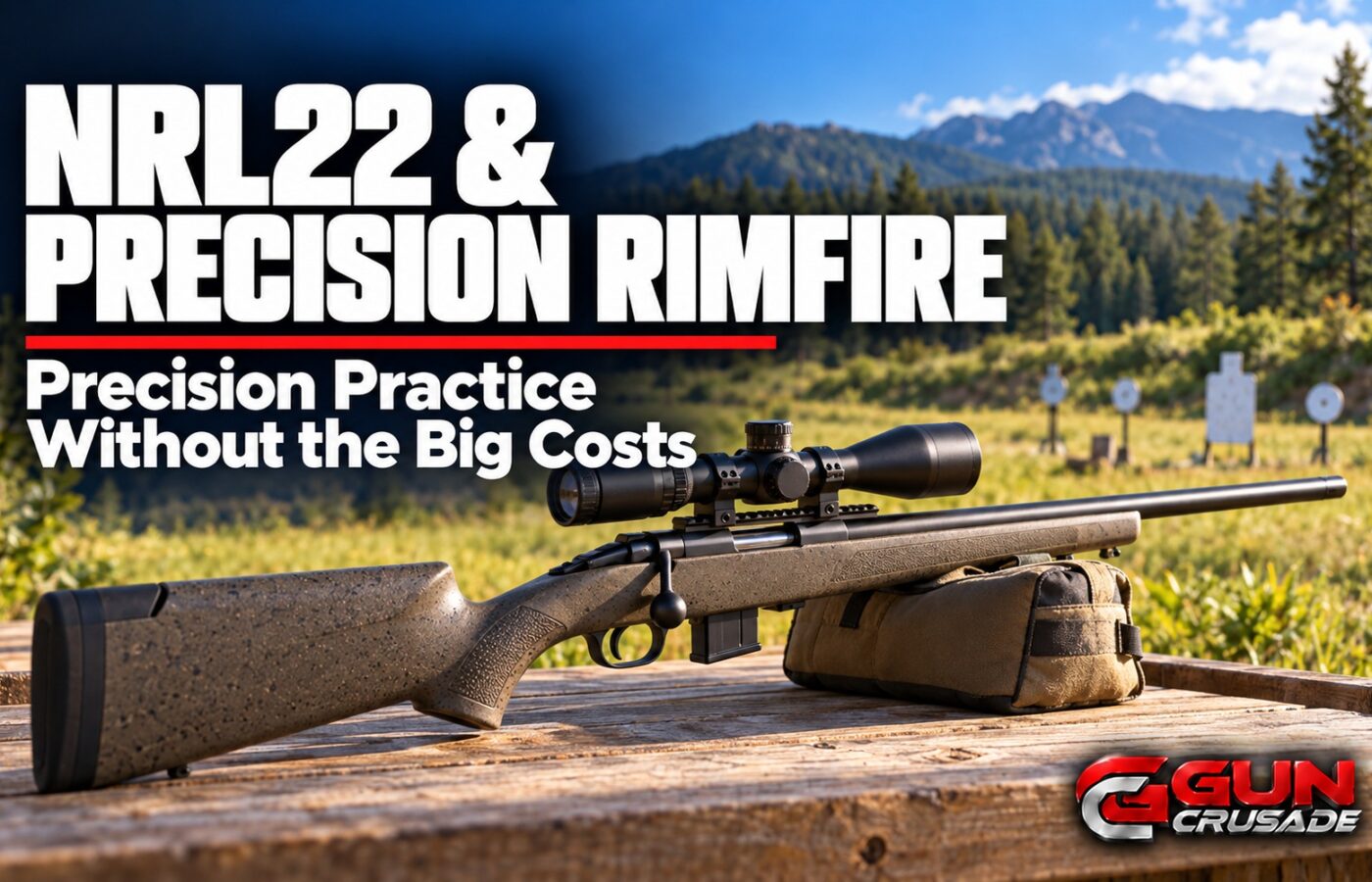
- A bolt-action or semi-auto .22 rifle that’s accurate. Many new rimfire rifles have threaded barrels and Picatinny rails, like the CVA Cascade Rimfire and Savage Timber Tactical listed by NSSF’s Let’s Go Shooting.
- A scope with good adjustments. Variable power and a reticle with holdover marks help a lot. Gun Digest’s September roundup includes Hawke’s Vantage HD 30 SF line with rimfire-specific reticles.
- A bipod and a rear bag. Positional shooting depends on solid support.
- Several magazines and around 100 to 200 rounds.
- Eye and ear protection.
Why it makes you a better shooter
Wind affects a .22 bullet much more than a centerfire bullet. That means rimfire precision teaches you to read wind, build stable positions and manage your breathing, all at very little cost. Many PRS shooters and hunters use rimfire practice to stay sharp between centerfire matches and before deer season.
Getting started
1. Find a club that runs NRL22 or a similar rimfire precision match. 2. Practice positions at home with an unloaded, verified-clear rifle. 3. Learn your scope: practice dialing and holding. 4. Zero at 50 yards and record where your rifle hits at 25, 75 and 100 yards. 5. Show up, introduce yourself and focus on safe, steady shooting.
Safety
Precision matches use cold-range rules: rifles stay unloaded with actions open or empty-chamber flags inserted until a shooter is on the line and given the command. Follow the range officer’s commands every time.