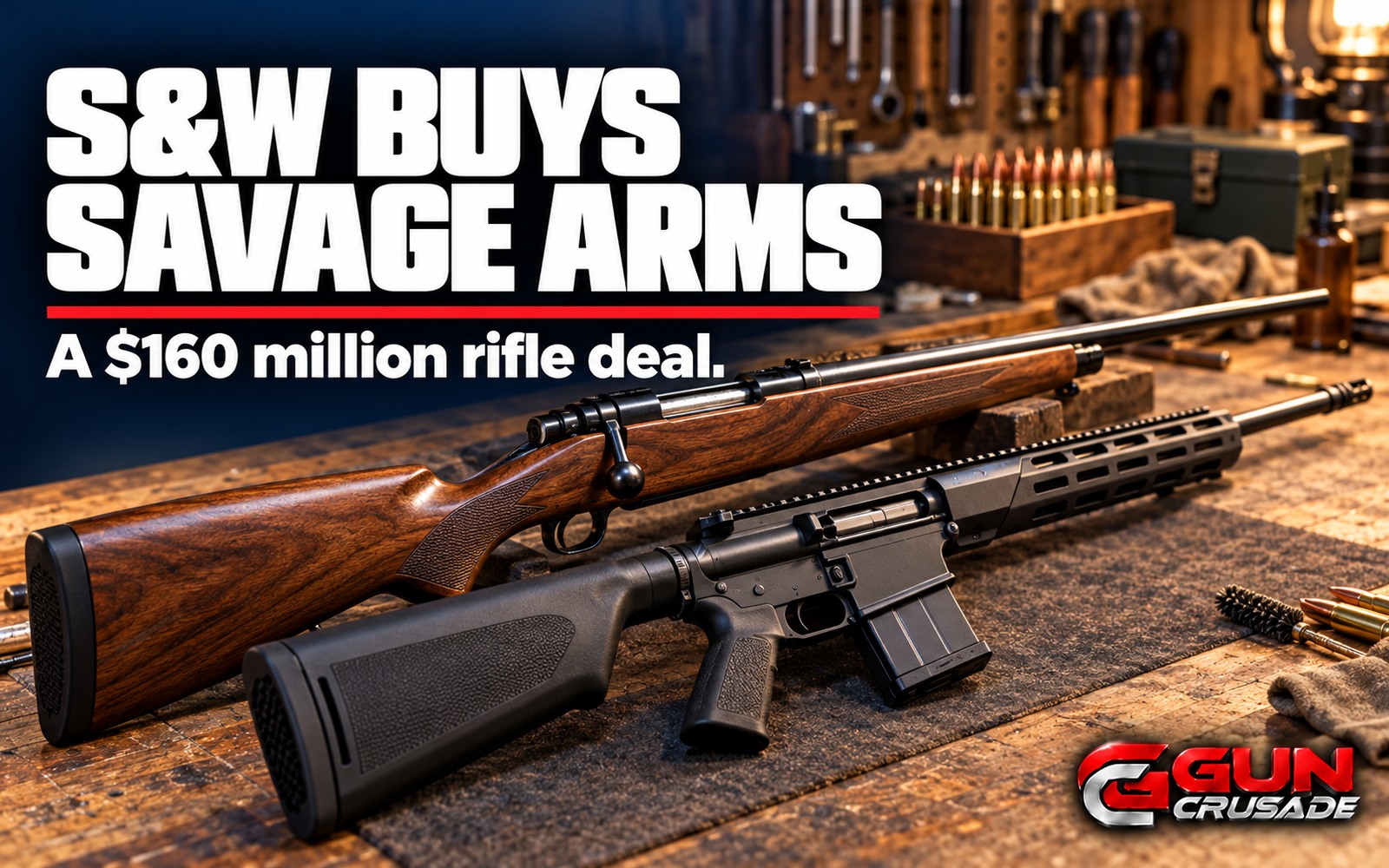
One of the biggest names in American handguns now owns one of the biggest names in American hunting rifles. Smith & Wesson Brands announced on October 21, 2026, that it has completed its acquisition of Savage Arms, the Massachusetts company best known for affordable, accurate bolt-action rifles. The news was first carried by Guns & Ammo, which published the company’s announcement, and the deal terms were laid out in a filing Smith & Wesson made with the Securities and Exchange Commission the same day.
For the millions of hunters who have carried a Savage into the deer woods, this is worth understanding. Here is what the companies have said, what they have not, and what it may mean for you.
The Deal at a Glance
According to the SEC filing, the purchase values Savage at $160 million, subject to customary adjustments. Smith & Wesson paid with a mix of stock and cash: about 9 million shares of its common stock, valued at $13.62 per share, plus $37.5 million in cash. The seller was a subsidiary of JDH Capital, an investment firm that now owns 16.7 percent of Smith & Wesson’s stock and has added a representative to the company’s board, which now has seven directors.
The deal is already closed. This is not a proposal waiting on approval; Savage became part of Smith & Wesson on the day it was announced.
A few numbers from the announcement help put Savage’s size in perspective:
- Savage had about $160 million in net sales over the twelve months ending September 30, 2026.
- Guns & Ammo‘s report puts Savage’s workforce at approximately 500 people.
- Savage is headquartered in Westfield, Massachusetts. Smith & Wesson made the announcement from its headquarters in Maryville, Tennessee.
Smith & Wesson says the combined company will now make handguns, revolvers, rifles, shotguns and suppressors, and that it will be the “largest commercial firearms manufacturer in the United States,” as the company put it in the release Guns & Ammo published. That is the company’s own claim.
Why the Two Companies Fit Together
On paper, the match is easy to see. Smith & Wesson’s strength is handguns, revolvers and modern sporting rifles. Savage’s strength is hunting long guns, especially bolt-action rifles. There is not much overlap in what they build, but there is a lot of overlap in where they sell: the announcement notes that both companies already move product through many of the same distributors, dealers and big-box stores.
Both companies also share deep Massachusetts roots. Smith & Wesson traces back to 1852 and Savage to 1894, which means this deal joins two of the oldest names in the American gun trade.
The company says it expects about $2.5 million a year in early cost savings from combining operations. That kind of figure usually comes from shared purchasing, distribution and back-office work, though the release does not spell out where the savings will come from.
What We Don’t Know Yet
Several questions that matter most to everyday shooters were not answered in the announcement:
- The Savage name. Neither the release nor the filing says whether Savage-branded rifles will continue under that name, though there is no announcement of any change.
- The Westfield plant and workers. The announcement does not lay out plans for Savage’s facility, its leadership or its employees. The filing’s standard list of business risks mentions retaining key personnel and a “relocation,” but does not say what, if anything, would be relocated. GUN Crusade is not drawing conclusions from that wording, and readers shouldn’t either until the company says more.
- Product lines. No product changes, discontinuations or price changes were announced.
What Savage Owners Can Do Now
If you own a Savage rifle, nothing about this news changes how it shoots or how you should care for it. A few common-sense steps are still worth taking:
- Keep your paperwork. Hang on to your receipt and any warranty registration. If you ever need service, proof of purchase makes it simpler regardless of who owns the company.
- Contact Savage directly with service questions. If you have a repair in process or a warranty question, ask Savage customer service how the change in ownership affects it rather than relying on rumors.
- Don’t panic-buy. There has been no announcement that any Savage model is going away. If you were planning to buy a Savage this season, shop as you normally would.
GUN Crusade’s take (opinion): Mergers can bring more investment and wider distribution, or they can bring trimmed product lines and closed plants. Which way this one goes will show up over the next year or two in what lands on dealer shelves. For now, the best thing a hunter can do is keep shooting, keep good records, and watch for official word from Smith & Wesson and Savage on the brand’s future. We will report it when they share it.