Most people who carry a gun think about the fight. Far fewer think about the minutes after it, or about the medical emergency that has nothing to do with a gun at all. A column published October 17 by The Firearm Blog (TFB) looks at that gap from a police officer’s point of view.
The piece is part of TFB’s “Front Line Friday” series, written for patrol officers. It covers the medical gear an officer can carry on the body for the first minutes before an ambulance arrives. The author’s trunk trauma kit was covered in an earlier column.
Why the first few minutes matter
The column’s starting point is simple. In many suburban and rural areas, it says, the median time from dispatch to an EMS crew reaching the patient runs 8 to 11 minutes, and in rural counties it can be longer than 14. Police officers are often first on scene. The author argues that agencies too often treat officers only as scene security, which can leave a gap in which a person who could have been saved is not.
That same math applies to a family on a back road in rural North Carolina or Georgia. If something goes wrong, the person who acts first may be you.
What the column recommends
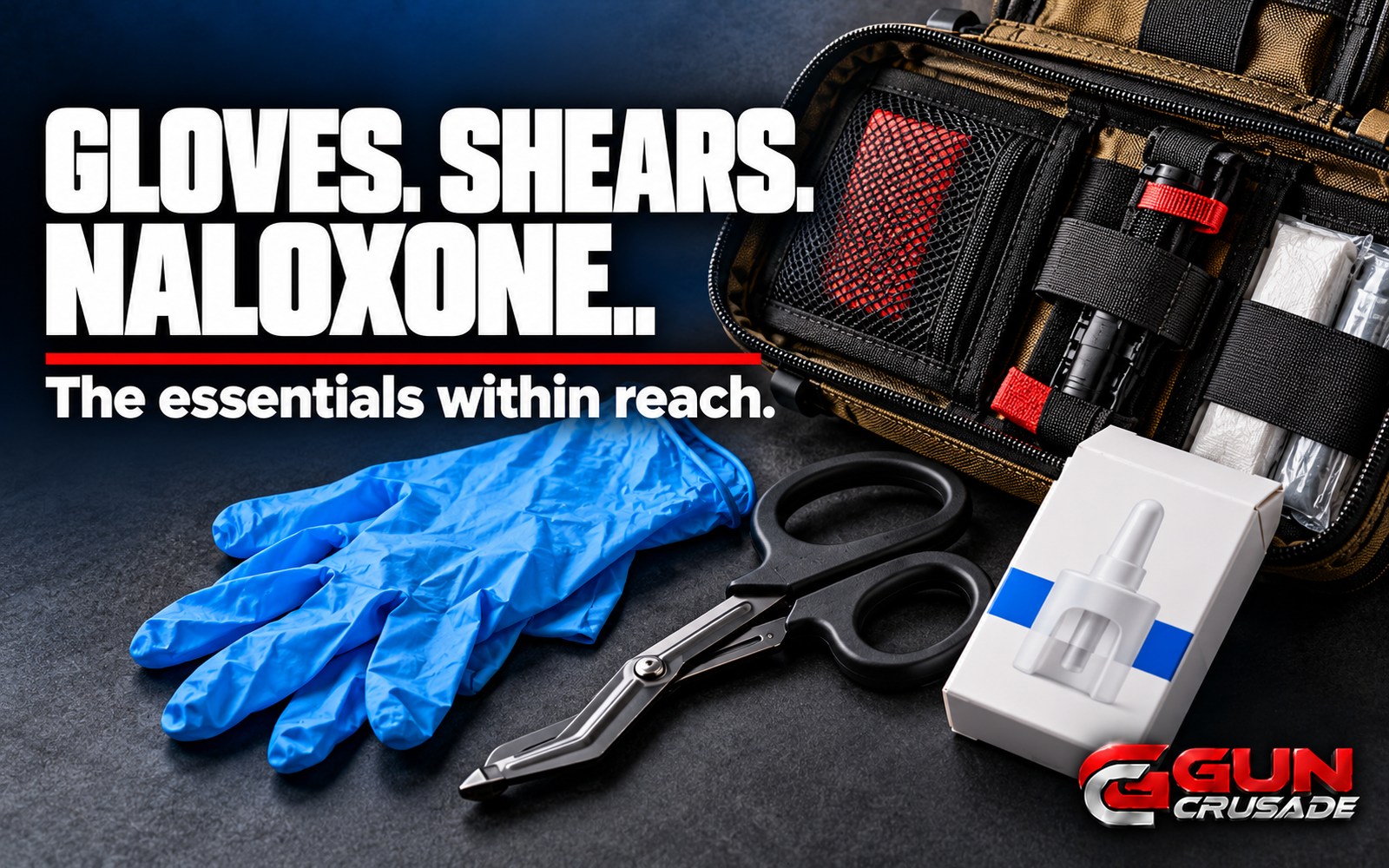
For officers, TFB’s author lists six on-body items:
- Nasal naloxone, two doses, which he rates as the highest-value item because it can reverse opioid overdoses and needs no needle
- Oral glucose gel, for a conscious diabetic patient whose low blood sugar can look like drunkenness or aggression
- A barrier CPR mask, so an officer is more willing to start CPR
- A nasopharyngeal airway, but only for officers with hands-on training and medical-director approval
- At least two pairs of nitrile gloves, carried on the person, not just in the car
- Trauma shears, clipped where they can be reached with one hand
The column is clear that it is not medical instruction. It tells officers to follow their agency’s protocols and their state’s scope-of-practice rules.
The system matters more than the gear
The most useful part of the column is not the list. It is the warning that gear without training and upkeep can fail you. The author points to expired supplies as a hidden weakness, noting that naloxone typically has a shelf life of 18 to 24 months and that a car interior can top 130 degrees in summer. In his words, “Silent expiration is the failure mode.”
His fix is to check medical gear on a set schedule, the same way officers check magazines. He also recommends a dedicated pouch with the same layout every time, so you are not digging around under stress. He argues that police departments should copy the whole system fire and EMS crews use, with defined scope, standing orders, training and replacement cycles, not just hand out the gear.
GUN Crusade’s take: lessons for armed families
You do not need a badge to learn from this. A few practical steps for everyday carriers and their families:
- Get trained before you buy. A CPR and bleeding-control class from a recognized provider is worth more than a pouch full of gear you have never used.
- Carry what you are trained on. Gloves and shears are simple. Anything more advanced should wait until you have had proper instruction.
- Put dates on the calendar. Check expiration dates when you change your smoke-detector batteries, and keep supplies out of a hot car when you can.
- Keep it in the same place. Whether it is in a range bag, a vehicle or on your belt, everyone in the family should know where the kit is.
- Talk to your doctor or pharmacist about naloxone or glucose gel if someone in your home or circle could need it.
Read the full column at The Firearm Blog. This article is for general information only and is not medical advice. Get hands-on training and follow your local laws and professional guidance.