Walk into any gun shop or scroll any gear site and you will find a long list of parts that promise to make you faster and more accurate. Triggers, compensators, sights, optics, grips. Some of them are good. But a column from instructor Fred Mastison, published by Ballistic Magazine, makes a point every gun owner should hear: the person holding the gun matters more than what is bolted onto it.
The budget rifle that won
Mastison tells a story from a precision rifle class he taught. When the class came down to its last two shooters, one had a custom rifle with top-end optics and electronics. The other had an off-the-shelf Remington 700 with a Vortex scope and, as Mastison describes it, a Walmart sun hat. The shooter with the budget rifle won.
He also notes that elite military units have done hard work with rifles that would be considered fairly basic today. Those shooters got good through repetition, not by owning the fanciest gear. In Mastison’s words, “it’s the person behind the gun who will determine the outcome.”
Where upgrades help, and where they don’t
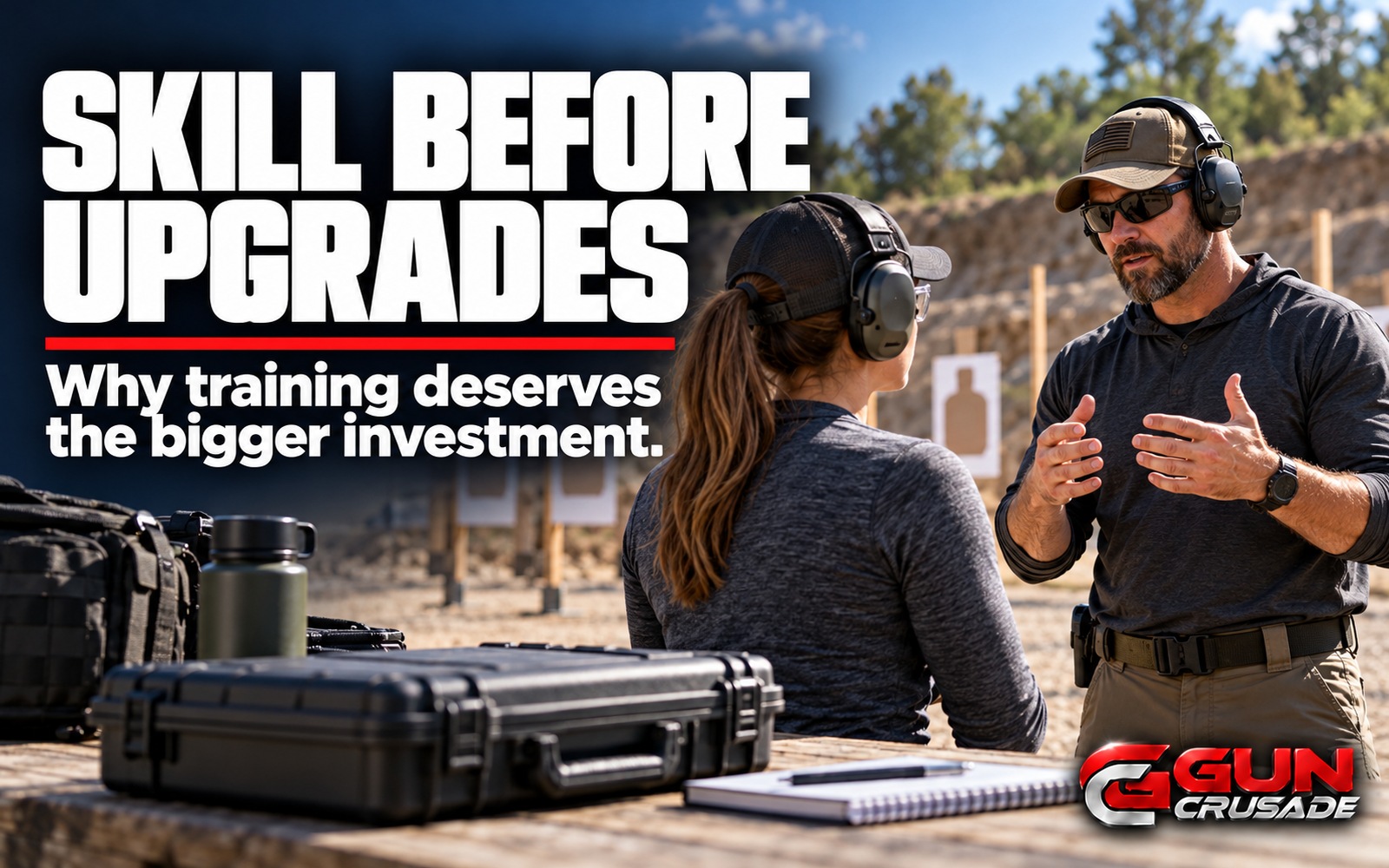
Mastison is not against upgrades. He likes good gear. His point is about returns. Going from a poor optic to a good one makes a real difference, he writes. Going from good to premium makes a much smaller one. A few months of structured training, on the other hand, can improve your shooting far more than either.
His sharpest advice is for new owners who start replacing parts on a gun before they have fired it much. He suggests learning to shoot the pistol as it came from the factory first. If you can run a stock trigger well, he argues, an aftermarket trigger will help you even more later.
GUN Crusade’s take: putting it to work
This message fits what many experienced instructors have long taught. For a family protecting their home or a concealed carrier, the stakes are real, and spending on practice is a better first step than spending on parts. Here is a simple plan:
- Pick one defensive gun and stay with it. Frequent switching makes it harder to build habits you can rely on under stress.
- Set a training budget before an upgrade budget. The cost of one premium accessory can cover a good class and a few hundred rounds of practice ammunition.
- Dry fire at home, safely. Unload the gun, put all live ammunition in another room, and practice your draw, grip and trigger press for a few minutes several times a week.
- Measure yourself. Use a shot timer or app and a simple drill, and write down your times and hits. Then you will know whether you are improving instead of guessing.
- Upgrade with a purpose. When you do change something, do it to fix a problem you have found in practice, not because it is new.
Gear still matters. A reliable gun, a good holster and a sturdy belt are the basics. But as Mastison’s column reminds us, those tools only work as well as the person using them. Read his full piece at Ballistic Magazine.