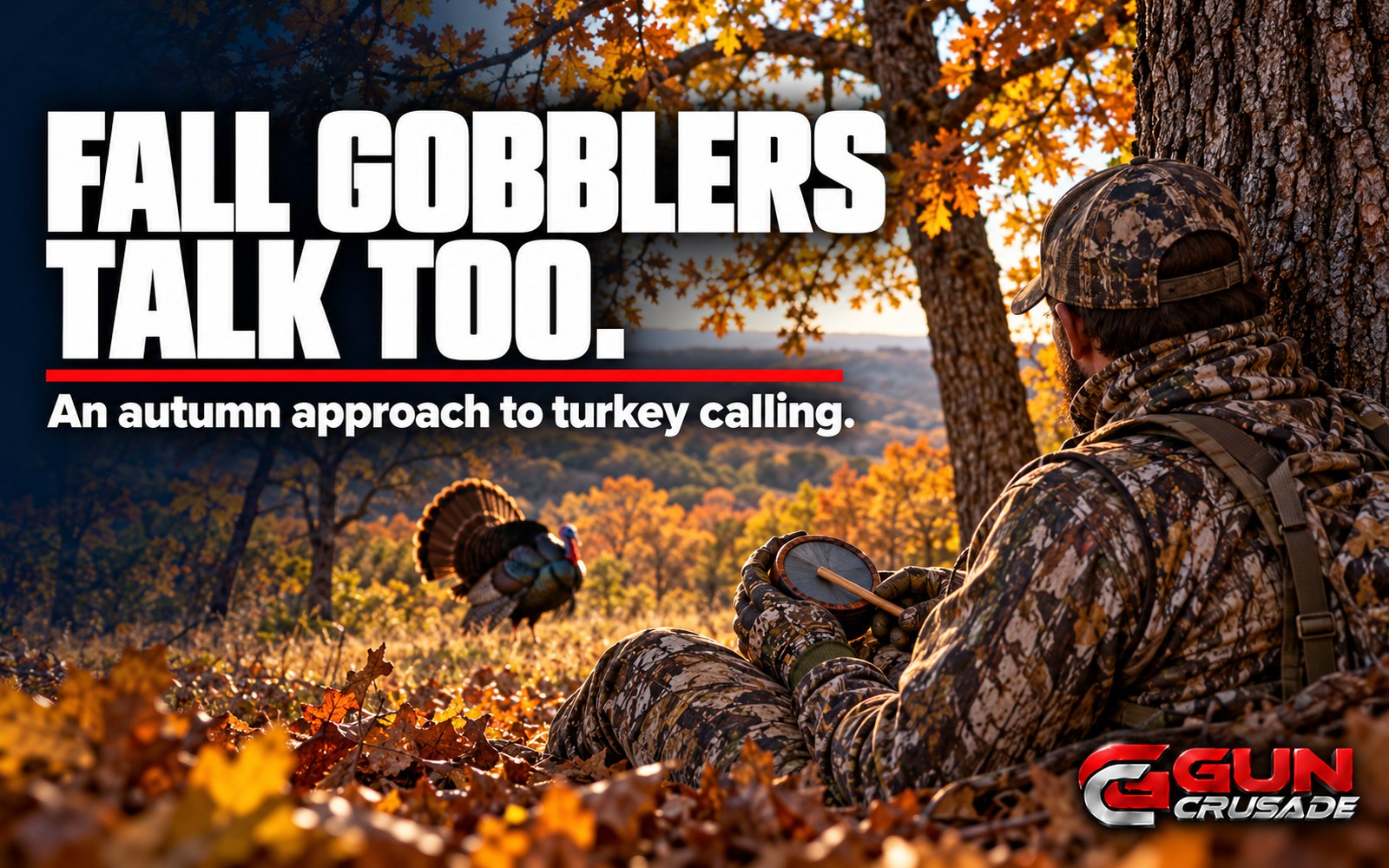
Many hunters put the box call away after spring and don’t think about gobblers again until April. Veteran turkey hunter Ray Eye says they are missing out. In an Outdoor Life piece published October 19, Eye calls the belief that toms respond to calling only in spring a myth. He writes that gobblers gobble through the fall and can be even more vocal than in spring.
If your state has a fall turkey season, his advice is worth a look. Here is our summary, along with a few points for hunters in the Southeast.
Spring and fall birds want different things
In spring, breeding drives turkeys. In fall, Eye says, food does. That means scouting starts with what the birds are eating, not with where you heard gobbling in April.
Early in the fall, look for soft mast such as dogwood berries, wild grapes, persimmons, hawthorn and crab apples. Insects, seeds, grasses and farm crops also draw birds: clover, beans, small grains and waste grain in cut fields. Later in the season, turkeys shift to hard mast like acorns and other nuts. Mast crops vary from year to year, so the hot spot last fall may be empty this fall.
Eye also notes that fall roosts tend to stay the same as long as the food and habitat don’t change. Find the roost and you have a good place to start.
Calling to a gobbler’s pride
Eye’s central idea is that fall gobblers are concerned with rank. They come to a call to find out who is making noise and to put the newcomer in his place. So instead of sounding like a lonely hen, he tries to sound like a new bird challenging the dominant ones. His reasoning is that a worked-up bird makes mistakes.
His roost-morning routine is simple:
- Get in close to the roost well before first light, on the same side the birds flew up the evening before.
- Wait for the first bird to call.
- Match what you hear, with a little more enthusiasm.
Eye also explains how to tell the sexes apart by ear. Hens and toms both cut, purr and put, so those sounds won’t tell you much. Gobbler yelps are slower, longer and coarser than the quicker, shorter yelps of a hen. He writes that a worked-up gobbler may string together around 30 yelps and give high-pitched putts.
Calls and techniques
Eye says a good slate or glass call handles soft tree talk, purrs and both hen and gobbler yelps. His own favorite is a diaphragm call, which he says can make nearly any turkey sound, including jake kee-kees and cutting. His technique notes come down to a few points:
- Yelp to match a bird’s volume and pitch, then add some emotion.
- Purr to settle nervous birds, the same as in spring.
- Cut and put to challenge a gobbler and get him fired up.
- Call to individual birds instead of the whole flock.
What it means for Southeast hunters
GUN Crusade’s take: Fall turkey opportunities differ a great deal from one Southeastern state to the next, and some states have no fall season at all. Before you try any of this, check your state wildlife agency’s current regulations for season dates, legal birds and bag limits.
Even if your state has no fall gun season, this kind of scouting still helps. Learning which oaks are dropping acorns and where birds roost in October will help you in spring. It will also help your deer hunting, since deer and turkeys often feed on the same mast.
Above all, identify your target. A fall hunt full of yelps and putts, sometimes with camouflaged hunters calling nearby, is no time to shoot at a sound or movement. Wear blaze orange while moving where it makes sense, sit against a tree wider than your shoulders, and be completely sure of your bird before you shoot.