Taking the shot isn’t the end of a deer hunt. Finding the deer is part of the job too. Outdoor Life executive editor Natalie Krebs covered this in a detailed blood-trailing guide published October 19. With rifle seasons open or opening across the Southeast and the rut close, now is a good time to review it.
Here are the main points from her guide, plus a few reminders from GUN Crusade.
Before you climb: pack for the recovery
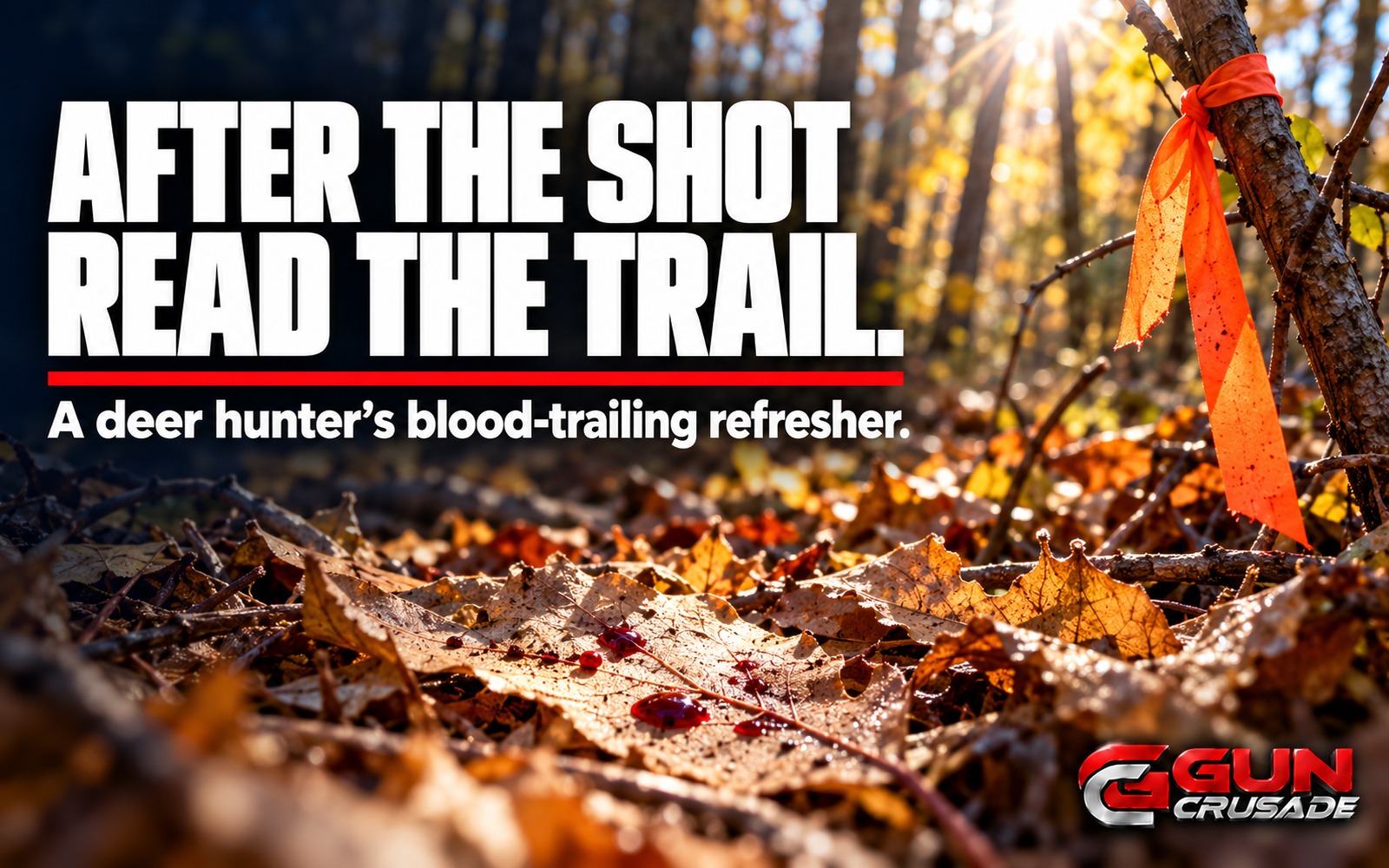
Krebs recommends keeping a few recovery items in your pack: a headlamp and a bright flashlight with spare batteries, a spray bottle of hydrogen peroxide (it foams when it touches blood), flagging tape or toilet paper to mark the trail, and a GPS or mapping app. Binoculars and a rangefinder help too.
Her most practical tip is to save phone numbers for a local blood-tracking dog handler, and drone recovery teams where they are allowed, before the season starts. You don’t want to be searching for those numbers at 9 p.m. with no blood in sight.
Read the shot before you move
The deer’s reaction gives you clues. Krebs writes that a mule kick often points to a heart hit. A hard, low run often follows a lethal shot, and lung- and liver-hit deer usually run. A hunched back, a tucked tail or a short run and stop often means a gut shot. No reaction at all can mean anything, so always go look for sign.
Before you climb down, note landmarks where the deer stood and where you last saw it. A rangefinder reading helps you find the spot later.
At the hit site, the blood tells you more:
- Frothy, bubbly blood usually means lungs.
- Bright red can mean lungs, or only a muscle wound.
- Dark red or maroon often points to the liver.
- Greenish or yellow material with a gut smell means the stomach or intestines.
How long to wait
The usual advice is to wait 30 minutes to an hour, Krebs notes. If you are certain of a heart or double-lung hit, you can often start sooner, especially in hot weather when meat spoils fast. A liver hit is different: her guide suggests waiting at least six hours. For a gut shot, back out and come back 8 to 12 hours later, ideally with a tracking dog.
She also warns about a common mistake. Hunters who think they hit lungs and liver often go after the deer too soon and push it. If you’re not sure where you hit, give the deer more time.
On the trail
A few of her tracking tips stood out to us:
- Stand still until you’ve spotted the next drop, so you don’t step on the sign.
- Look for blood on brush, grass and tree trunks, not just the ground.
- The ragged edge of a blood drop usually points the way the deer went.
- If the trail goes dry, go back to the last blood and spray peroxide. Look for tracks, flipped leaves and hair, and check well-used deer trails nearby.
- Call a tracking dog early. Grid searches and lots of people walking the area can make the dog’s work much harder.
If the deer crosses a property line, get the landowner’s permission before you follow it.
Check your state’s rules first
GUN Crusade’s take: Recovery tools are legal in some places and not in others. Krebs cites Blood Trackers United as listing statewide tracking-dog bans in Connecticut, Massachusetts, Oregon, Nevada and Arizona. She also cites the National Deer Association as reporting that drone recovery is legal in at least 14 states. Handheld thermal rules vary even more. Check with your state wildlife agency or game warden before you use any of them. Don’t assume your neighbor’s state rules apply to you.
Recovering a wounded animal is part of the hunter’s responsibility, and doing it well shows respect for the animal. If you hunt with kids or new hunters this fall, take them along on the blood trail. Teaching them to track and to be patient is as valuable as anything they’ll learn from the stand.